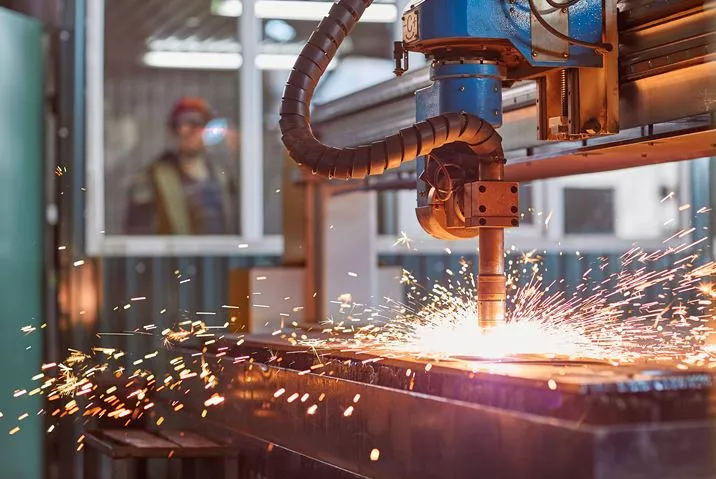
Laser and plasma cutting are two of the most widely used technologies for cutting metal and other materials. Both methods offer high precision, speed, and efficiency, but they also pose significant safety hazards for operators and the environment. This article will provide some safety tips and best practices for laser and plasma cutting, as well as a comparison table of their advantages and disadvantages.
What are Laser and Plasma Cutting?
Laser cutting employs a high-powered laser beam, focused through optics, to melt, burn, or vaporize material. The laser beam can be either continuous or pulsed, depending on the application and the material. Laser cutting can cut through various materials, such as steel, aluminum, copper, brass, wood, plastic, and more. Laser cutting is suitable for complex and intricate shapes, as well as thin and delicate materials.
Plasma cutting, on the other hand, uses a plasma torch that creates a high-velocity jet of ionized gas to cut through electrically conductive metals. The plasma is generated by passing an electric current through a gas, such as air, nitrogen, oxygen, or argon. Plasma cutting can cut through thick and hard metals, such as stainless steel, carbon steel, cast iron, and more. Plasma cutting is suitable for simple and straight cuts, as well as thick and tough materials.
Safety Hazards of Laser and Plasma Cutting
Both laser and plasma cutting involve high temperatures, high voltages, and high pressures, which can cause serious injuries and damages if not handled properly. Some of the common safety hazards of laser and plasma cutting are:
- Electrical shock: Laser and plasma cutting machines require high levels of electricity, which can electrocute operators or cause fires if there is a short circuit, a power surge, or a faulty connection. Operators must ensure that the electrical supply, including amperages, fuses, and breakers, is adequate for their equipment’s demands. They must also wear insulated gloves and shoes, and avoid touching any live wires or metal parts.
- Fire and explosion: Laser and plasma cutting generate sparks, flames, and molten metal, which can ignite combustible materials, such as oils, greases, paper, wood, or flammable gases. Operators must maintain a safe distance of at least 35 ft. from combustibles, flammables, oils, and greases. They must also have fire extinguishers readily accessible, and equip their machines with flashback protection to prevent gas backflow. They must also avoid cutting materials that contain explosive or toxic substances, such as batteries, aerosol cans, or asbestos.
- Fumes and dust: Laser and plasma cutting produce harmful fumes and dust, which can irritate the eyes, nose, throat, and lungs, or cause acute and chronic respiratory illnesses. Some of the hazardous substances that can be released during cutting include carbon monoxide, nitrogen oxides, ozone, metal oxides, and hexavalent chromium. Operators must use proper ventilation and exhaust systems to remove the fumes and dust from the cutting area. They must also wear appropriate respiratory protection, such as masks, filters, or respirators, depending on the type and concentration of the contaminants.
- Eye and skin damage: Laser and plasma cutting emit intense light and radiation, which can damage the eyes and skin, or cause permanent blindness or cancer. The level of exposure depends on the wavelength, power, duration, and distance of the light source. Operators must wear eye protection, such as welding hoods, goggles, or glasses, with the appropriate shade level, typically a level 10 or 11 or greater, to protect their eyes from the visible and invisible light. They must also wear skin protection, such as gloves, jackets, aprons, or sleeves, to protect their skin from the heat, sparks, and UV rays.
Safety Tips and Best Practices for Laser and Plasma Cutting
To ensure the safety of operators and the environment, laser and plasma cutting operations should follow some safety tips and best practices, such as:
- Workplace hazard assessment: Conducting a thorough workplace hazard assessment is essential for identifying and eliminating the potential risks and hazards of laser and plasma cutting. This assessment should include checking the environmental and operating permits, the electrical and gas supply hoses, the fire prevention and management measures, the PPE selection and availability, and the emergency response plan.
- Training: Comprehensive training programs are crucial for all operators, especially new or inexperienced ones, to learn the proper operation, maintenance, and troubleshooting of the laser and plasma cutting machines. They should also be familiar with the safety rules and regulations, the hazard communication and labeling, the MSDS sheets, and the first aid procedures.
- Heightened awareness: Encouraging a culture of safety first, where every operator is aware of the potential hazards and knows how to mitigate them, is essential. Operators should always inspect the machines and the materials before cutting, follow the manufacturer’s instructions and recommendations, use the correct settings and parameters, and report any problems or incidents immediately.
